Building InspectionsBy PrimeCheck · 7 min read
A Section 137B report documents visible defects and incomplete owner-builder work for certain Victorian property sales. Learn what it covers, what it does not prove, and how to confirm whether your transaction needs one.
A Section 137B report is an independent inspection report used when a Victorian owner-builder sells a property in circumstances covered by section 137B of the Building Act 1993. It records visible building defects and incomplete or non-compliant work so the purchaser can assess the property before the sale proceeds.
The report is not a guarantee that a building has no defects, and it is not the same document as a Section 32 vendor statement. The exact obligations depend on the property, the owner-builder work and the timing of the proposed sale.
The short answer
A Section 137B report gives a prospective buyer an independent assessment of visible defects and incomplete work connected with owner-builder building activity. It matters most when the proposed sale falls within the owner-builder requirements in the Building Act 1993, rather than simply because the property has had renovation work.
Treat the report as a transaction document, not a box-ticking exercise. It should record the location and condition of visible water entry, incomplete work and safety-related defects, because those findings can affect repair decisions, buyer questions and advice needed before exchange or settlement. It does not replace legal advice or specialist testing for concealed building elements.
Use the Victorian Building Authority's owner-builder guidance and the current Building Act 1993 to check whether the proposed sale needs a report, insurance or other supporting documents. Then ask a conveyancer or solicitor to confirm the documents required for that particular transaction. Do not rely on an older article when it does not link to the current rules.
What the report means under Victorian law
Section 137B sits within Victoria's Building Act 1993 and addresses information about defects in owner-builder building work and, where applicable, protection connected with that work. Check the current wording in the Act and the Victorian Building Authority owner-builder guidance before relying on a legal conclusion.
This is not simply a general pre-purchase inspection. A buyer's inspection gives a purchaser information about the broader condition of a property, while a Section 137B report addresses the statutory context attached to owner-builder work and the proposed sale. Starting with a standard inspection and assuming it automatically satisfies section 137B is the wrong approach.
The current Act and regulator guidance determine when the obligations apply, what supporting documents may be needed and who can prepare the inspection report. This article explains the report's purpose, but it does not replace advice from the Victorian Building Authority, a conveyancer or a solicitor about a particular transaction.
Section 137B should also be kept separate from several phrases people use during a property sale:
- Section 32 statement: a vendor statement containing prescribed information about a Victorian property under the relevant provisions of the Sale of Land Act 1962. It is not a substitute for a Section 137B inspection report.
- Section 19 or Section 17 report: these phrases need context because people sometimes use section numbers without naming the relevant Act or document. Ask the person requesting the report to identify the legislation and purpose in writing.
- Pre-purchase building inspection: an inspection commissioned by a buyer to assess the broader condition of a property. It may be useful alongside a Section 137B report, but it does not automatically satisfy every owner-builder sale requirement.
Read the current Building Act 1993 and check the Victorian Building Authority's owner-builder guidance before relying on an older explanation.
What an inspector examines inside the property
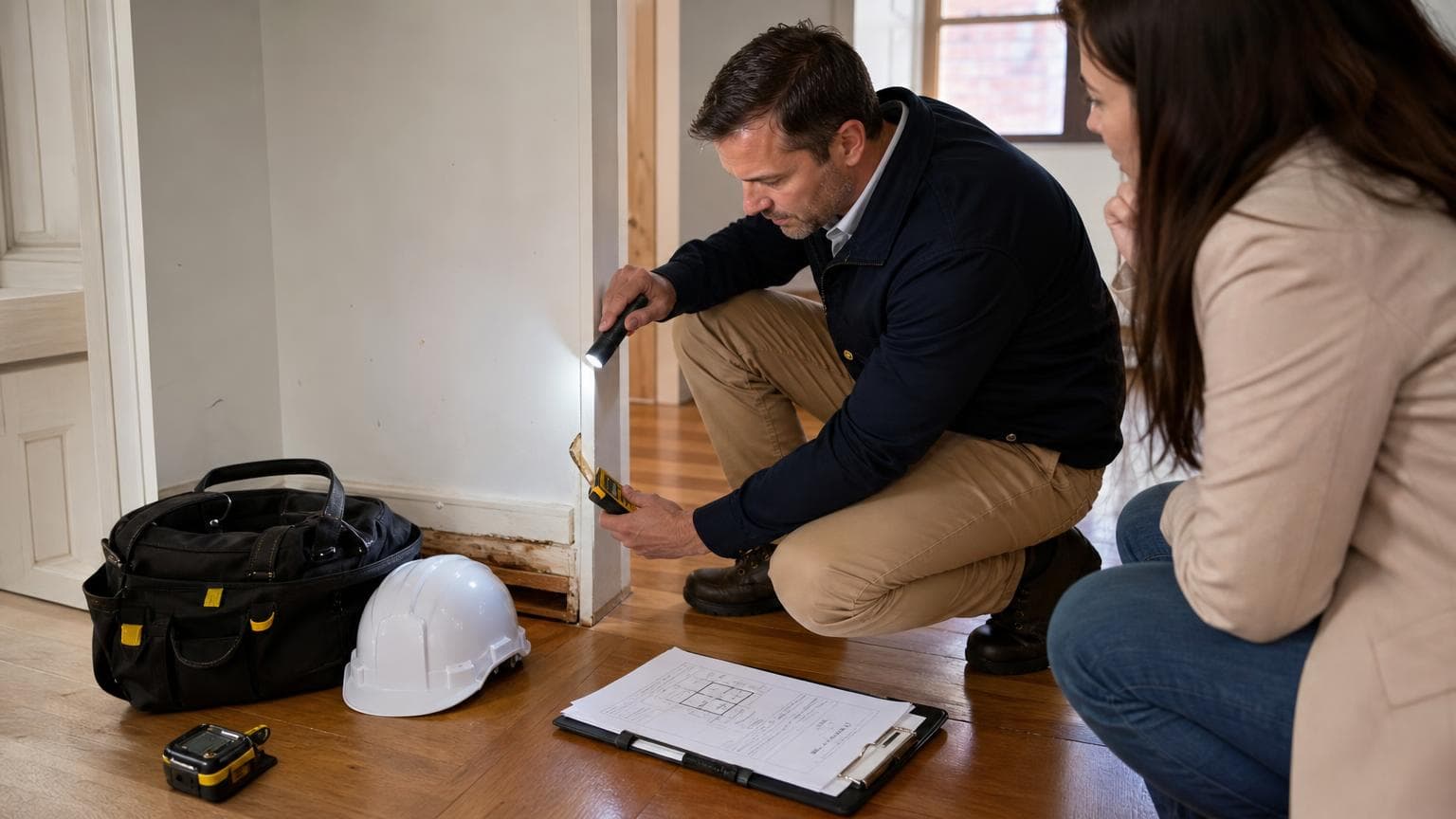
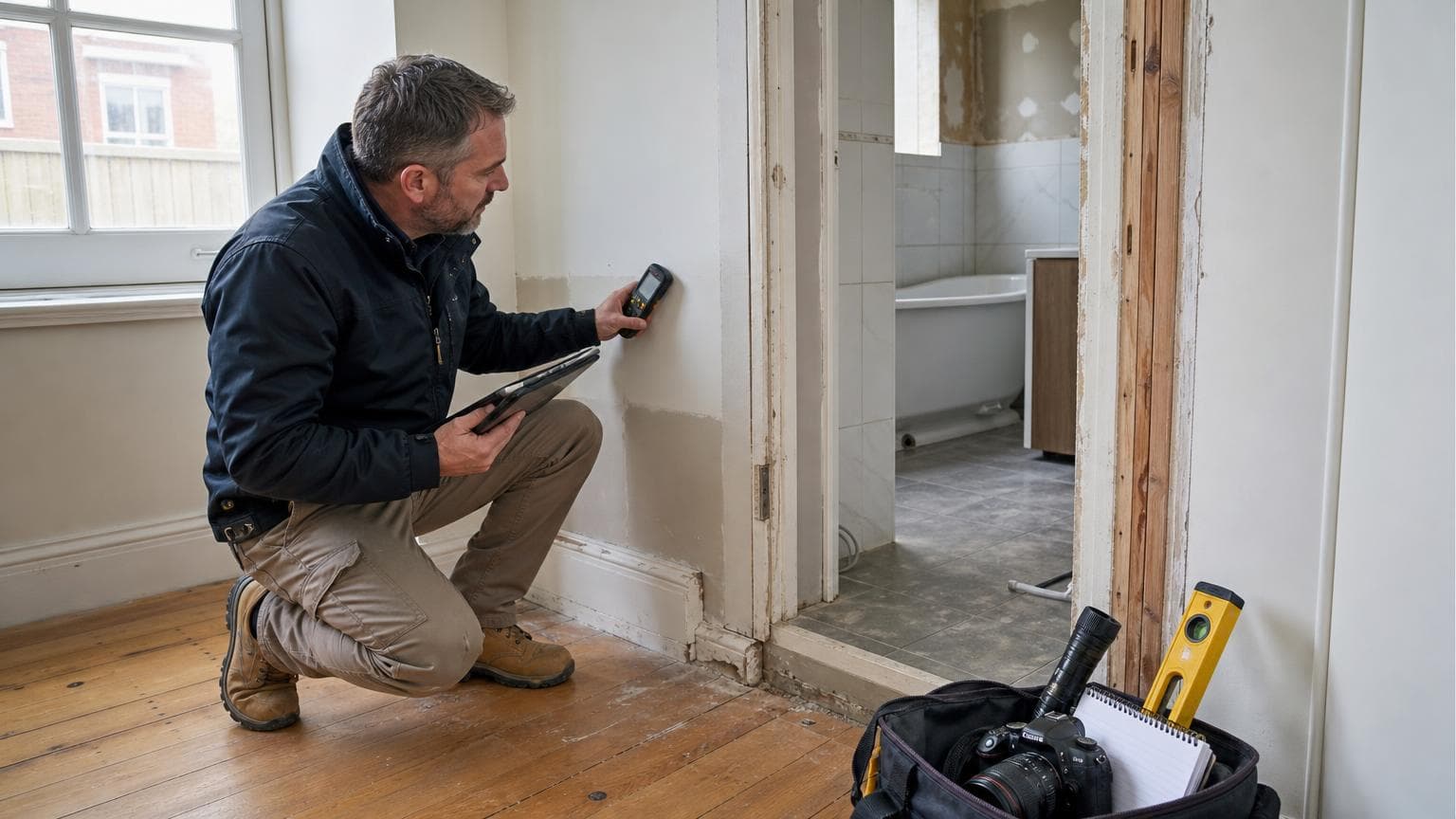
A useful owner-builder report should make the condition of the work understandable room by room, not hide the findings behind a short list of vague comments. The inspector assesses accessible areas and records observable defects, incomplete work and signs that warrant further investigation.
Depending on the property and the scope of the owner-builder work, the inspection may examine:
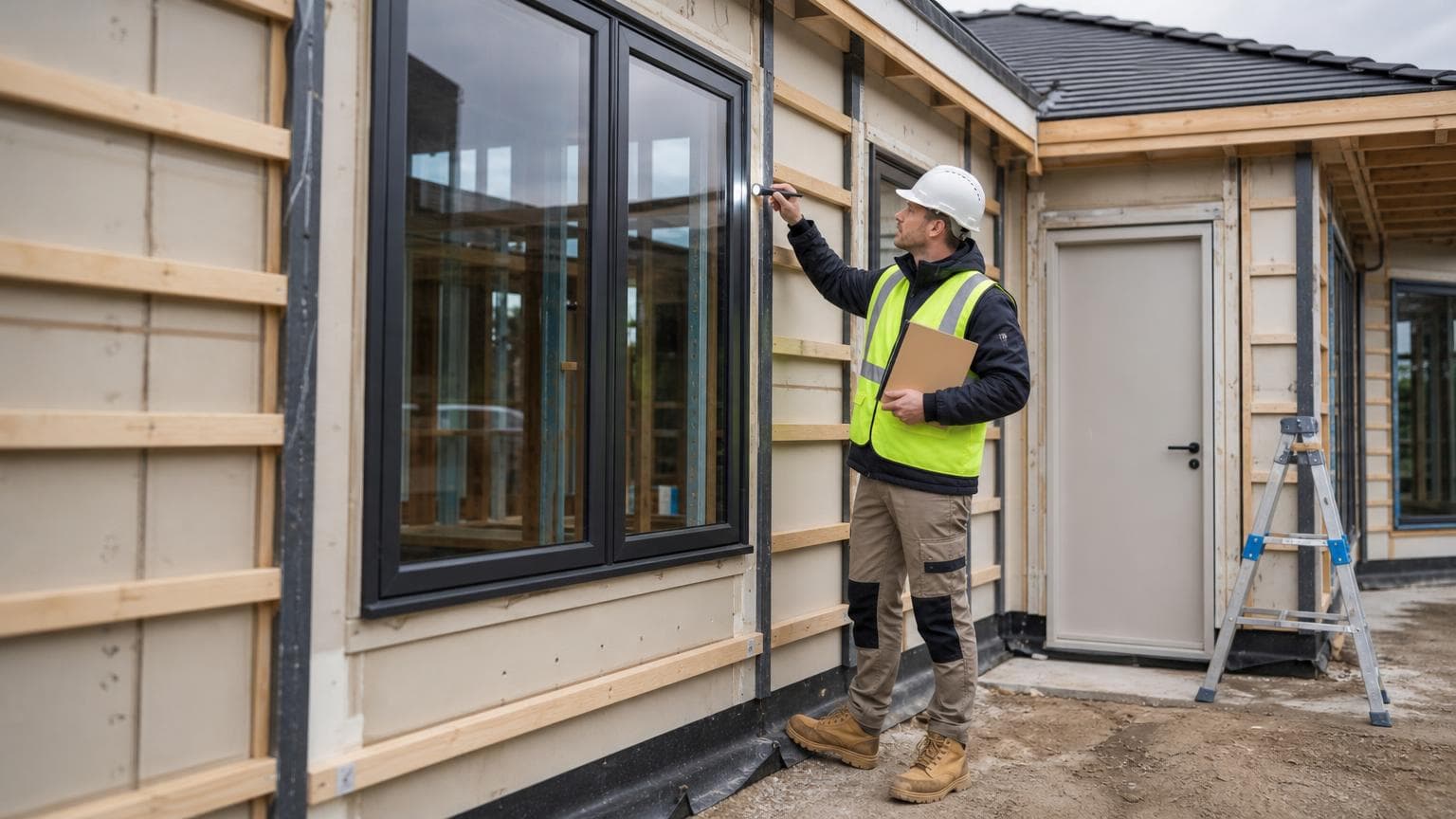
- external walls, cladding, brickwork, render, paint finishes and visible cracking
- roof coverings, gutters, downpipes, flashings and other accessible roof elements
- subfloor areas, visible drainage, dampness and ventilation where access permits
- internal walls, ceilings, cornices, floors, doors, windows and visible finishes
- wet areas, including bathrooms, laundries and kitchens, for visible moisture damage and construction defects
- stairs, balustrades, decks, balconies, handrails and other accessible external structures
- visible plumbing, electrical and mechanical fixtures, without presenting the inspection as a substitute for specialist trade testing
- areas that remain incomplete, damaged, poorly finished or inaccessible at the time of inspection
The report should identify the location of each finding, explain why it matters and include photographs where they clarify the issue. A crack in a garage slab, for example, needs a location and description that distinguishes it from a similar-looking crack in an internal wall. The inspection also needs to state limitations, such as locked areas, concealed construction or restricted access.
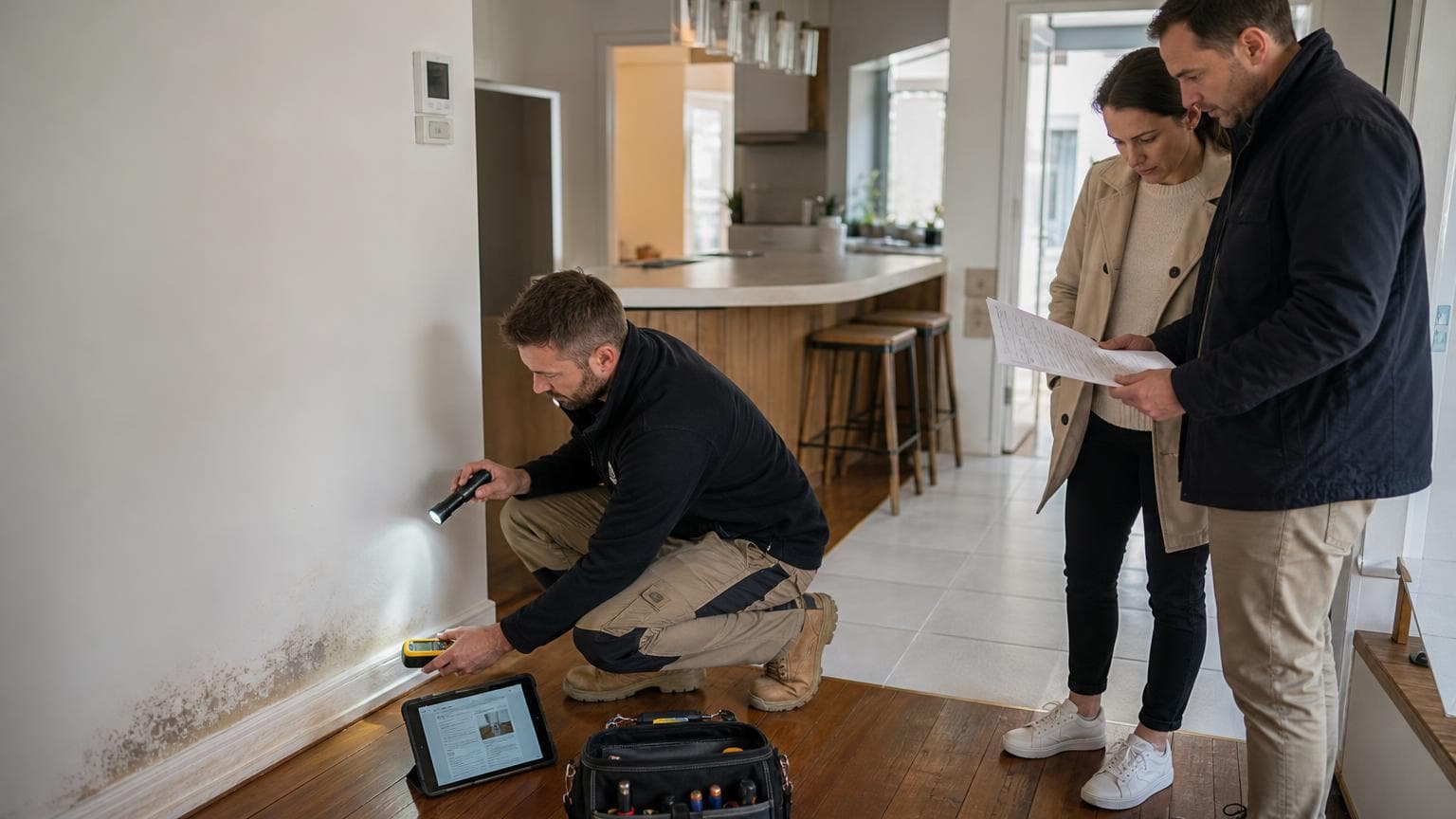
PrimeCheck Inspections uses thermal imaging, an ME5 moisture meter and laser levelling equipment as part of its inspection approach where those tools assist the assessment. These tools do not reveal every concealed defect. They add evidence to the visual inspection rather than replace it.
PrimeCheck Inspections states that its reports refer to Standards Australia publications, including AS 4349.1 for property inspections and AS 4349.3 for timber pest inspections. The inspectors are fully licensed and insured and have backgrounds in construction, engineering and defect identification. Those credentials do not remove the need to read the report's stated limitations, but they give the reader useful information about who carried out the assessment.
How to read the findings before making a decision
Read the defect descriptions before looking at any suggested repair priority. First identify whether the issue is cosmetic, functional, water-related, structural or incomplete work. Then check whether the report recommends a specialist assessment, quotation or urgent safety action.
Do not pay for repairs or rely on a seller's verbal assurance until you know what the report actually establishes. A visual inspection can identify evidence that needs attention, but it cannot price concealed damage or confirm the adequacy of work hidden behind finishes.
Rank the findings by decision impact: specialist investigation comes first, defects that may need rectification before settlement come next, and lower-priority maintenance comes last. That approach is more reliable than treating every photograph as equally serious.
What is a 137B report, in plain English?
A 137B report is an owner-builder defects inspection report prepared for a Victorian property sale where the Section 137B requirements apply. It gives the buyer and other parties a documented assessment of visible defects and unfinished or defective building work.
The report does not approve the building, certify every trade job or prove that no hidden defect exists. It also does not determine the sale price. If you need a structural opinion, repair cost or advice about the contract, this report alone will not answer those questions.
When the cost and timing need checking
There is no reliable single price for every Section 137B report. Pricing varies according to the property's size, construction, location, access, the amount and type of owner-builder work, and whether additional inspection time or reporting is required. A fixed quote is more useful than a generic online price because it sets out what the inspection includes.
Ask these questions before booking: which areas will be inspected, whether the report includes photographs, what equipment the inspector may use, what access the owner must provide, whether a reinspection costs extra and whether the report meets the document requirements for the intended sale.
PrimeCheck Inspections provides fixed pricing with no hidden costs and support to explain the report and next steps. The business services Melbourne and selected Regional Victoria locations, including Geelong, Ballarat, Bendigo and the Mornington Peninsula. Confirm availability and the required report type before making an appointment.
Questions Victorian owners commonly ask
Do I need a 137B report?
You may need one if you are an owner-builder selling a Victorian property in circumstances covered by section 137B. Confirm the requirement with the Victorian Building Authority or a property lawyer before marketing the property, especially if the work was recent or the sale involves unusual ownership or building circumstances.
When is a 137B report required in Victoria?
The requirement depends on the owner-builder work, the property and the timing of the sale. The current Building Act and Victorian Building Authority guidance control the answer, so do not rely on a report written for a different transaction or an older legal regime.
Who can do a 137B report?
Use a building inspector who holds the appropriate Victorian licence or registration for the work and can demonstrate that the report meets the current statutory requirements. Ask for the inspector's licence details, insurance information, inspection scope and reporting standard before booking.
How much does a Section 137B cost?
The cost depends on the property and inspection scope rather than the words Section 137B alone. Request a written quote that identifies the property type, access assumptions, inclusions and any additional services before proceeding.
Where to go from here
If you are selling owner-builder work, first establish whether Section 137B applies to your transaction. If you are buying, obtain the report and read its limitations before treating it as evidence that the property is defect-free. This article will not tell you whether a particular defect is structurally serious or whether a sale contract protects your position; those questions need the appropriate building or legal professional.
If the property has no owner-builder work or the sale does not fall within the statutory circumstances, a Section 137B report is not the right starting point. For the inspection scope, booking process and report inclusions, see PrimeCheck Inspections' Section 137B Owner-Builder Defects Reports Victoria service page. If your property falls within Melbourne or the listed Regional Victoria locations, book the inspection after confirming the legal document requirements for your sale.
- Section 137B report
- Owner-builder reports
- Victorian property inspections
- Building defects
- Property sale reports